


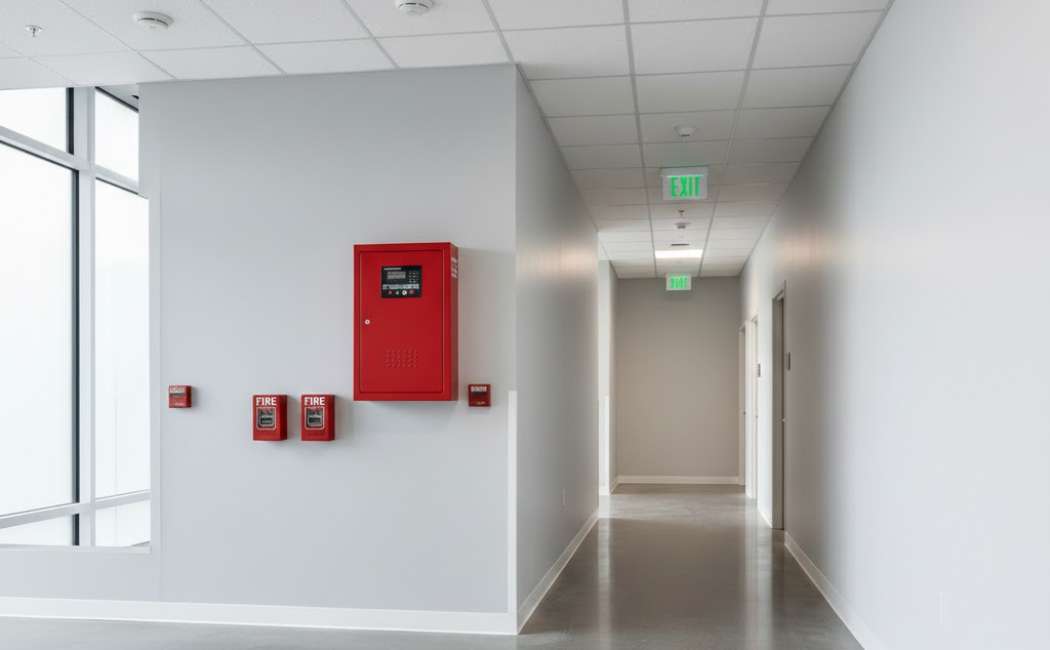
Fire safety is not a legal obligation, but a concern. The ability or inability to select an appropriate fire alarm system can be the difference between a fast reaction and a catastrophic loss, whether you are dealing with a commercial property, residential complex or industrial facility. Amid the variety of types of systems, the development of safety codes, and the changes in building risks, it is necessary to make the appropriate choice and plan it carefully. The following guide will take you through all you should know to choose an appropriate fire alarm system that will keep people, property, and peace of mind safe.
Why Fire Safety Matters
The initial protection in any emergency is the fire alarm systems. They warn the occupants, initiate emergency actions, and assist in minimizing damages before a situation can escalate. The well-designed system is life-saving because it can make timely warnings, evacuate people safely and help first responders to find the origin of danger.
Other than safety, fire alarm systems are necessary to meet local and national fire codes. The failure to comply with these rules may lead to imposing fines, insurance problems, or even closure. By spending on the correct system, you will know your building is legal and at the same time keep your important assets and people safe.
Know Your Building’s Risks
All buildings possess individual fire safety requirements. Risk assessment. Before selecting a system, consider the exact risks involved in your property. The size of the building, the way it is laid out, and the use of the building are all contributing factors.
As an example, the needs of a small office building are different from those of a large warehouse or multi-story apartment complex. The occupation rate is also important, whereby the buildings with extensive traffic, the vulnerable occupants, or the overnights must have quicker detection and a more straightforward alert system. Kitchens, electrical rooms, storage areas, or manufacturing areas may be considered high-risk areas that require special detectors or additional protection.
The knowledge of these risks contributes to making sure the fire alarm system is configured to react fast and efficiently in real-world conditions.
Pick the Right System
Fire alarm systems can be divided into three broad categories:
- Conventional
- Addressable
- Wireless
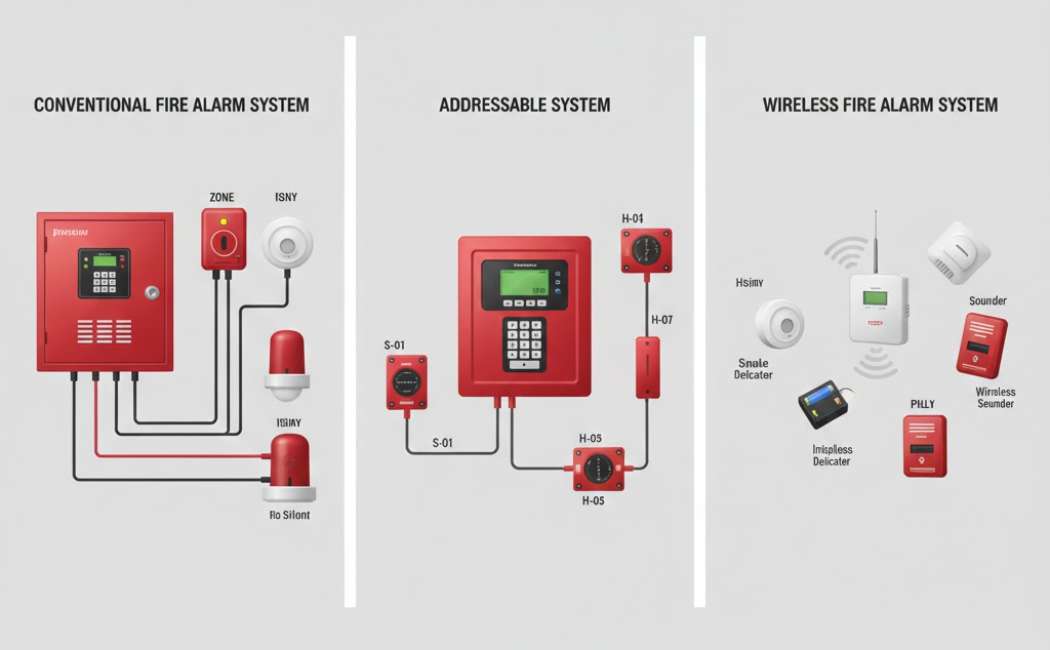
Traditional systems separate a building into areas. When an alarm is activated, you are informed about the zone that is involved, but not which device. These systems are economical and can be applied where the layout of a building is simpler than that of a large building.
The addressable systems offer accurate information since they tell which specific device or detector has been triggered. This simplifies the process of troubleshooting and also ensures faster response, particularly in large or complex buildings. Although more expensive to install initially, they are more valuable in the long term than most of the properties.
Wireless systems are well-suited to old buildings, a renovation, or a place where it is hard or impossible to install cables. They are flexible, can be installed much faster and cause little disruption without affecting the effective protection. The appropriate system to use is determined by your building size, structure and expansion plans.
Key Features to Consider
A fire alarm system does not consist just of smoke detectors. The correct configuration involves a number of key elements in collaboration. Detectors need to fit the environment. One picks the smoke detector, heat detector or multi-sensor detector depending on the form of the fire hazard. Audible and visual alarms can guarantee that all of them are aware of alerts, even people with hearing or visual disabilities.
The control panel is the brain of the system, which monitors the signals and provides responses. Added features of sprinklers, emergency lighting, and monitoring services provide an additional level of protection that can greatly minimise the damage through automatic responses.
Selecting systems that contain quality, trusted, and reliable components enhances the safety and longevity of the systems.
Adherence and Domestic Knowledge
Fire regulations are based on the location, and they cannot be compromised. National standards just give a guideline, and local codes usually have other requirements. This is why it is necessary to cooperate with a reliable security provider in Devon, PA.
Local professionals are familiar with local fire codes, inspection and localized permitting. They are also the ones who make sure that your system is created and set up according to all legal requirements, so you will not risk being inspected and having to pay a lot of money to upgrade your system later.
Maintenance and Installation Count
Even an excellent fire alarm system cannot work well when it is not installed or even maintained properly. Professional installation makes sure that the detectors are fitted in the right places, wiring is in place, and the system is operating as planned.
Constant maintenance is equally significant. Timely repairs, testing and regular inspections ensure the system is reliable and meets the code. A maintenance plan will assist in pointing out problems at an early stage and prolonging the life of your investment.
Partner With Experts
Fire safety is not a single choice- it is a continuous process. Having the most qualified fire protection services in Devon, PA will enable you to access qualified advice, quality equipment and reliable services. Professional humans will be able to determine risks, prescribe the correct system, and offer a long-term service that will follow the development of your building requirements.
Checklist Before You Decide
Prior to the choice of a fire alarm system, check out the following list:
- Find out what type of system should be used in your building.
- Establish that there is full adherence to local fire codes.
- Compare system functionality and integration.
- Make certain of an effective maintenance and inspection process.
- Select trained local fire safety personnel.
Informing the decision that you make today makes your building safe, compliant and ready to meet the unexpected. An appropriate fire alarm system is not only an investment in making an equipment purchase, but also it is an investment in lives and security in the long run.